
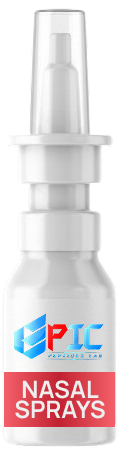
$84.98 – $809.98Price range: $84.98 through $809.98
ARA 290 nasal spray supplies cibinetide, an 11-residue fragment of erythropoietin helix B, in a metered solution format. It was designed to lack the parent hormone principal activity. Laboratory research use only.
Epic Peptides Lab · Research Use Only
pGlu-Glu-Gln-Leu-Glu-Arg-Ala-Leu-Asn-Ser-Ser · cibinetide · ~1257 Da
ARA 290 nasal spray supplies cibinetide, the 11-residue peptide pGlu-Glu-Gln-Leu-Glu-Arg-Ala-Leu-Asn-Ser-Ser at roughly 1257 daltons. Written either with or without the hyphen, the compound is a fragment of erythropoietin engineered to do the one thing the parent hormone is famous for not at all, which is an unusual design objective worth understanding.
| Property | Value |
|---|---|
| Compound | ARA-290 |
| International non-proprietary name | Cibinetide |
| CAS number | Not stated here. No registration was traced to a primary source during preparation of this page |
| Molecular weight | Approximately 1257 g/mol. Confirm against the lot certificate |
| Residue count | 11 |
| Sequence | pGlu-Glu-Gln-Leu-Glu-Arg-Ala-Leu-Asn-Ser-Ser |
| Parent molecule | Human erythropoietin, a 165-residue glycoprotein |
| Derivation | The helix B surface domain of erythropoietin |
| Design objective | Retain tissue-protective signalling without erythropoietic activity |
| Reported receptor | The innate repair receptor, described as a heterodimer of the erythropoietin receptor and CD131 |
| Amino terminus | Pyroglutamate, blocked against aminopeptidases |
| Carboxy terminus | Free serine. Not amidated |
| Net charge at neutral pH | Negative. Three acidic residues against one arginine |
| Chromophore | None. No tryptophan, tyrosine or phenylalanine. 280 nm absorbance does not apply |
| Deamidation-prone residues | Asparagine at position 9, followed by serine |
| Originating programme | Brines and Cerami, Araim Pharmaceuticals |
| Format | Metered nasal spray, solution state |
| Physical state | Aqueous solution, supplied ready to use |
| Purity | Per lot-specific certificate of analysis |
| Storage | 2-8°C, protected from light. Do not freeze |
| Regulatory status | No approved human or veterinary formulation in any jurisdiction |
Most peptide fragments are made to concentrate what the parent does. ARA 290 nasal spray was made to discard part of it, which is the reverse of the usual objective.
Erythropoietin is a 165-residue glycoprotein best known for driving red blood cell production. That activity is the reason it is a household name.
Work at Araim Pharmaceuticals identified that the tissue-protective signalling attributed to erythropoietin runs through a different receptor arrangement than the erythropoietic signalling does.
Erythropoietic activity is reported to require a homodimer of the erythropoietin receptor. The tissue-protective signalling is attributed to a heterodimer pairing that receptor with CD131.
Two different receptor assemblies reading the same hormone means the two activities can in principle be separated by a ligand that engages one and not the other.
This peptide is that ligand. Derived from the helix B surface domain, it is reported to engage the heterodimer while not driving erythropoiesis.
That separation is the entire point of the compound, and it makes the molecule interesting as a pharmacological tool independent of any application.
For an experiment the implication is direct. Comparing this fragment against intact erythropoietin is the design that tests the separation claim, and it is the comparison the compound exists to enable.
This compound contains no tryptophan, no tyrosine and no phenylalanine, which is unusual for an eleven-residue peptide and has a practical consequence.
The standard concentration measurement for a peptide is absorbance at 280 nanometres, which reads aromatic side chains. With none present, that method returns nothing usable.
Detection during chromatography has to run at 214 nanometres on the amide bond instead. That is less specific and more sensitive to mobile phase composition.
A certificate quoting 280 nanometre detection for this compound has a problem worth raising, since there is nothing at that wavelength to detect.
Concentration by ultraviolet absorbance is therefore unavailable, and quantification has to rest on amino acid analysis, gravimetry corrected for counterion and water, or a colorimetric total-peptide assay.
Each of those is more laborious than a spectrophotometer reading. That is why concentration figures for compounds like this one are worth scrutinising.
The upside is that the absence of aromatic residues removes the photodegradation and oxidation routes that dominate storage for the tryptophan-containing compounds in this range.
So the molecule trades easy measurement for genuine chemical stability, which is a reasonable trade for a product held in solution.
The carboxy-terminal region carries a specific chemical liability that a purity figure will not report.
Asparagine at position 9 is followed immediately by serine, and asparagine followed by a small residue is the classic deamidation motif in peptide chemistry.
Deamidation converts asparagine to aspartate, adding one dalton and introducing a negative charge where there was none.
One dalton on a molecule of roughly 1257 is a shift a low-resolution instrument will not separate, so the reaction is silent on a nominal-mass report.
The reaction proceeds through a cyclic succinimide intermediate that can open to either aspartate or isoaspartate, and isoaspartate shifts the backbone by one carbon while leaving the mass identical to aspartate.
Mass spectrometry cannot distinguish those two at all, so even a high-resolution instrument reports only that deamidation occurred rather than which product formed.
Deamidation accelerates in aqueous solution and under alkaline conditions, which makes it the principal time-dependent concern for this product rather than oxidation.
Since the reaction adds a negative charge to a molecule already carrying three acidic residues, ion-exchange chromatography separates the products better than reversed-phase does, which is worth knowing before choosing a method.
Three compounds in this batch open with pyroglutamate, and the residue does something slightly different in each context.
In the two GnRH compounds the pyroglutamate is part of the native hormone sequence, present because evolution put it there.
Here it appears at the amino terminus of a fragment cut out of a larger protein, where the parent had an ordinary glutamine or glutamate in a folded context.
Cyclisation blocks aminopeptidases in the same way regardless of origin, so the functional consequence is the same even though the provenance differs.
The verification consequence is also shared. An uncyclised preparation sits 17 daltons heavier, near 1274, and that check applies here exactly as it does for gonadorelin and triptorelin.
What differs is that this compound has a free carboxy terminus rather than an amide, so only one end is protected rather than both.
Carboxypeptidases therefore have an entry point here that they do not have on the GnRH compounds. The terminal serine is not a difficult residue for them.
In an aqueous product with no enzyme present that is irrelevant, but it matters for any experiment involving biological fluid or cell culture medium containing serum.
ARA 290 nasal spray sits above the size range where transnasal transport works well, in company with several others in this catalogue.
Passage between epithelial cells stops being efficient somewhere near 1,000 daltons. That is the practical transition point.
At roughly 1257 daltons this compound is above that line, comparable to kisspeptin-10 at 1,302 and gonadorelin at 1,182.
Charge works in its favour relative to those two. Three acidic residues against one arginine give a net negative charge, and an anionic molecule is not held by a negatively charged mucosal surface the way a cation is.
That reduces mucoadhesion, which cuts both ways. Less binding means less retention at the surface as well as less obstruction to transit.
No aromatic residues means low hydrophobicity, which limits the transcellular route across the lipid membrane as an alternative to paracellular passage.
Published intranasal pharmacokinetic data for this compound is not established, and the published work used parenteral administration.
Anyone working by this route should measure delivered amount rather than infer it, which is the same conclusion that applies to every compound above the threshold here.
The panel here differs from the generic one in three places. Each follows from the chemistry above.
Measured mass against roughly 1257, with the resolution stated so that a one dalton deamidation shift would have been visible.
A specific check for a species near 1274, which indicates uncyclised glutamine at the amino terminus rather than the intended pyroglutamate.
Purity by chromatography with the detection wavelength stated. It must be 214 nanometres, since this compound has no aromatic residue and 280 nanometre detection sees nothing.
Sequence stated explicitly, since the compound circulates under both ARA-290 and cibinetide and neither name carries chemical information.
Counterion identity, reported beside net peptide content. At roughly 1257 daltons a single trifluoroacetate at 114 is roughly 9 percent of the associated mass, and this molecule has three acidic residues that can each carry one.
Water content by Karl Fischer where the material was supplied as a powder before formulation, since a hygroscopic peptide carries water that counts on the balance.
A CAS number is not stated on this page because none was traced to a primary source during preparation. A supplier quoting one should be asked for the registry entry rather than taken at their word.
ARA 290 nasal spray is among the more chemically stable products in this range, which narrows the storage requirements to one thing that matters.
Hold the bottle between 2 and 8 degrees Celsius, out of the light, and never freeze a solution-state product.
Light protection is a precaution here rather than a requirement, since there is no aromatic residue to photodegrade, which distinguishes this product from the tryptophan-containing sprays.
Deamidation at the Asn-Ser motif is the reaction that actually proceeds. It is pH dependent, accelerating under alkaline conditions.
A periodic pH check on an opened bottle is therefore more informative here than a visual inspection, since the degradation produces no visible change.
Because the failure mode is silent on both appearance and nominal mass, elapsed time in solution is the practical variable to control.
Date the bottle when opened and record that date alongside the lot, the stated concentration, the storage temperature and the actuation count.
Any study running past a few weeks should re-measure rather than assume, which is the only defensible approach with a silent degradation route.
Selected references verified against the publisher record.
What is ARA-290 nasal spray?
A metered aqueous solution of cibinetide, an 11-residue peptide derived from the helix B surface domain of erythropoietin, at roughly 1257 daltons. Supplied for laboratory research only.
Why was it designed to lose an activity?
Because erythropoietic signalling and tissue-protective signalling are reported to run through different receptor arrangements, and this fragment engages the tissue-protective one without driving red blood cell production.
What is the innate repair receptor?
A receptor arrangement described as a heterodimer of the erythropoietin receptor and CD131. Erythropoietic activity is reported to require an erythropoietin receptor homodimer instead.
What experiment does the compound enable?
Comparing this fragment against intact erythropoietin, which is the design that tests the separation claim and the comparison the compound exists to make possible.
Why does the missing chromophore matter?
Because there is no tryptophan, tyrosine or phenylalanine, so 280 nanometre absorbance returns nothing usable. Detection must run at 214 nanometres, and a certificate quoting 280 has a problem worth raising.
How is concentration measured then?
By amino acid analysis, gravimetry corrected for counterion and water, or a colorimetric total-peptide assay. Each is more laborious than a spectrophotometer reading, so concentration figures deserve scrutiny.
Is there an upside to that?
Yes. The absence of aromatic residues removes the photodegradation and oxidation routes that dominate storage for the tryptophan-containing compounds in this range. The molecule trades easy measurement for real stability.
What is the deamidation risk?
Asparagine at position 9 followed by serine is the classic deamidation motif. The reaction converts asparagine to aspartate, adding one dalton, which a low-resolution instrument will not separate.
Can the products be distinguished?
Only partly. The cyclic intermediate opens to either aspartate or isoaspartate, which have identical masses, so even high-resolution instruments report that deamidation occurred rather than which product formed.
Which chromatography separates them best?
Ion exchange, because deamidation adds a negative charge to a molecule already carrying three acidic residues. Reversed-phase separates them less well, which is worth knowing before choosing a method.
Why is no CAS number stated?
Because none was traced to a primary source during preparation of this page. A supplier quoting one should be asked for the registry entry rather than taken at their word.
How does its size affect nasal transport?
At roughly 1257 daltons it sits above the 1,000 dalton transition, comparable to kisspeptin-10 at 1,302. Its net negative charge reduces mucoadhesion relative to the cationic peptides here, which cuts both ways.
ARA-290 nasal spray is sold exclusively for laboratory research use. It is not a drug, food, or cosmetic product, and it is not a dietary product of any kind. It is not approved by the FDA or any comparable authority for human or veterinary use, no approved human or veterinary formulation exists in any jurisdiction, intranasal pharmacokinetic data for this compound is not established, the published work used parenteral administration, and no CAS registration was traced to a primary source during preparation of this page. This product is not intended to diagnose, treat, cure, or prevent any disease. It must not be given to humans or animals. Purchase is restricted to qualified researchers and institutions operating within applicable laws. All handling is the responsibility of the purchasing laboratory.
| Weight | 0.5 lbs |
|---|---|
| Dimensions | 3 × 3 × 4 in |
| Package | 1 Vial, 2 Vials, 3 Vials, 5 Vials, 10 Vials |
The same verification the labs that use our compounds demand — documented, transparent, and enforced on every order.

Independent HPLC and mass-spec testing confirms identity and purity on every batch.

A full certificate of analysis is published and downloadable for every lot we ship.

Tracked, discreet packaging with reshipment coverage on qualifying orders.

Orders confirmed before 12 PM PT on business days ship the same day from our US-based facility.
Enter your details to access our catalog, COA library,
and research compound database.
By submitting you agree to receive email communications from Epic Peptides Lab You can unsubscribe at any time. All products for in vitro research use only.

Restock alerts, new compounds and fresh lab results.
We’ll email your code straight away – 15% off, one-time use.
Research updates only. Unsubscribe any time.
Reviews
There are no reviews yet.